



A New Chapter in Indonesian Customer Service
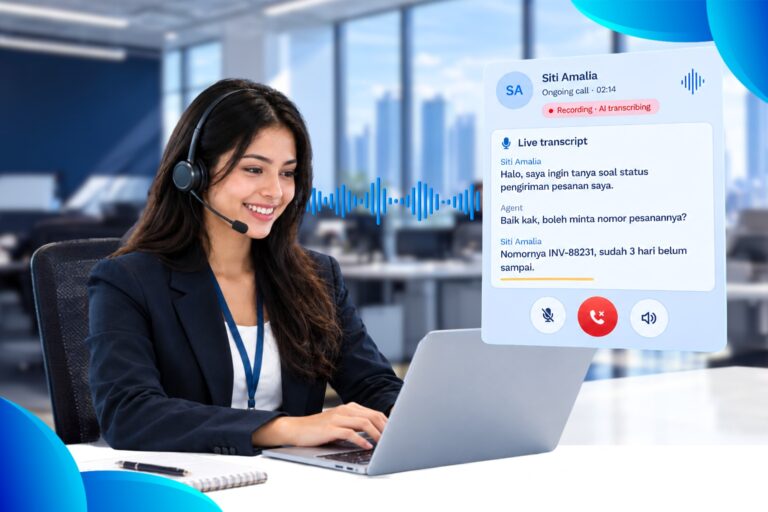
Voice-based customer service in Indonesia is entering a brand-new era. After years of relying on conventional call centers and rigid IVR menus, an increasing number of enterprises are turning to AI Voice Agents—artificial intelligence voice assistants capable of understanding, responding, and even taking actionable decisions during phone calls in a completely natural way, without pre-scripted responses or waiting on hold for a human agent.
From Simple Chatbots to Assistants That Truly “Listen”
For years, customer service automation in Indonesia was synonymous with text-based chatbots on WhatsApp or corporate websites. However, the paradigm is shifting toward voice.
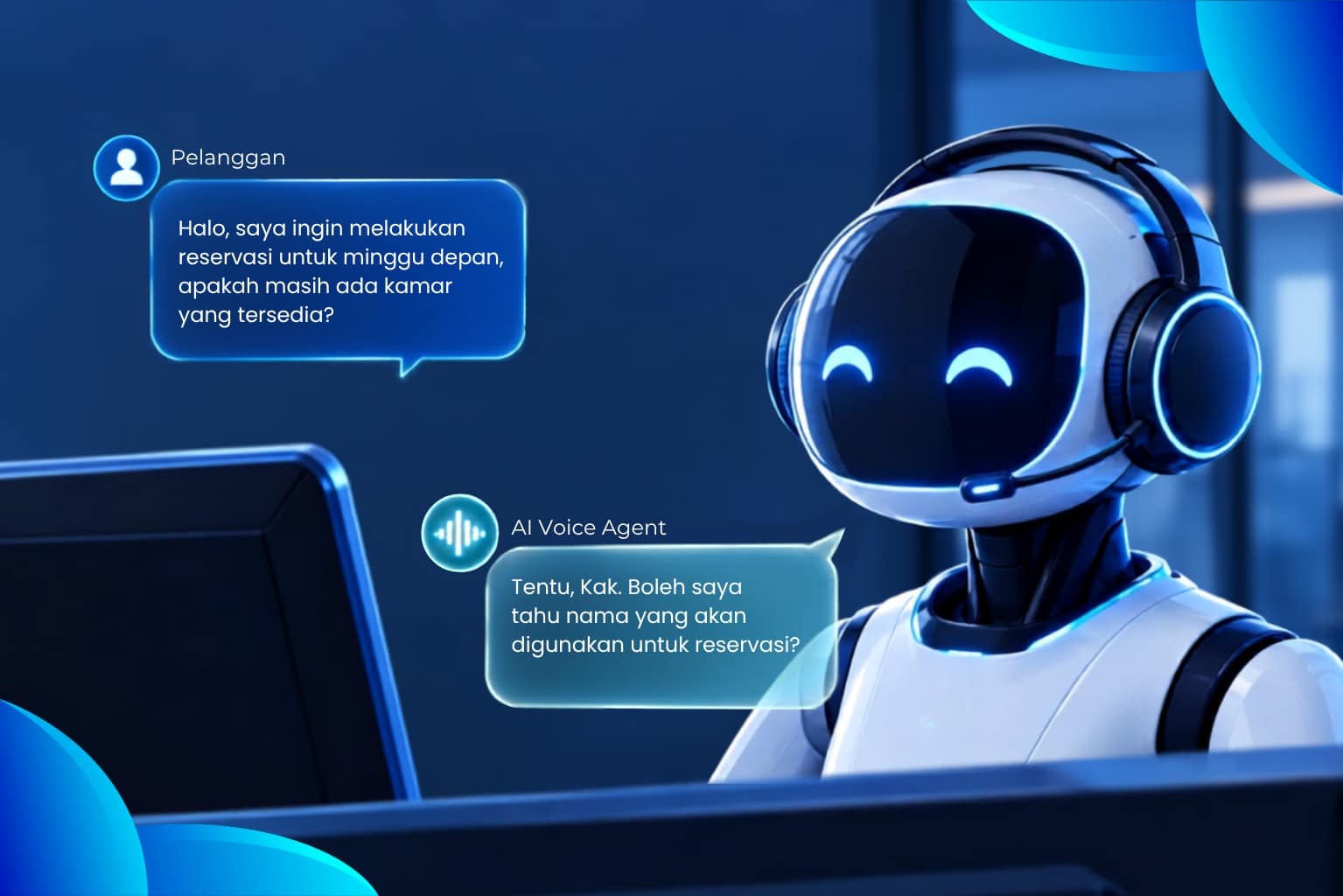
Unlike traditional IVR systems that offer limited menu choices (“press 1 for…”, “press 2 for…”), AI Voice Agents combine Automatic Speech Recognition (ASR), Natural Language Processing (NLP), and Text-to-Speech (TTS) synthesis to comprehend caller intent in context and respond with human-like intonation.
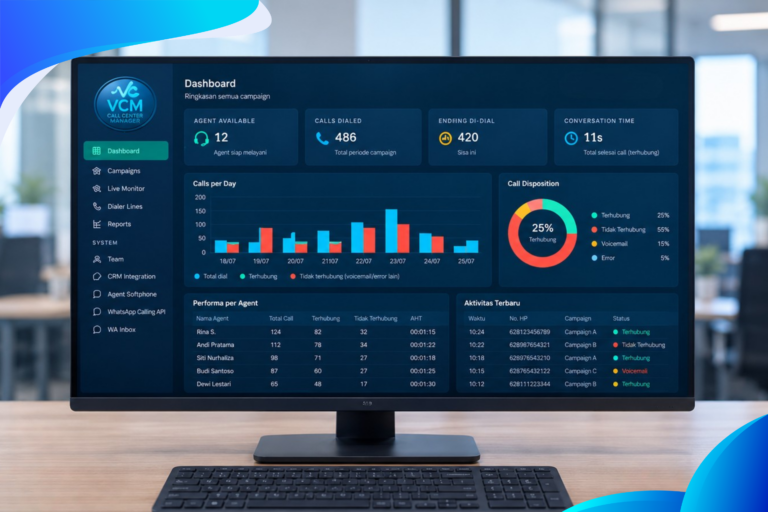
Several technology providers in Indonesia have begun developing AI Voice Agent solutions to help enterprises manage customer communications without manual effort, while ensuring seamless integration with existing tech stacks for a consistent experience. This frees human teams to focus on high-complexity cases requiring strategic decision-making, rather than getting bogged down answering repetitive inquiries.
Why Now?
Several key drivers are fueling this momentum, distinguishing it from past AI trends:
Escalating Communication Volumes: Businesses across logistics, banking, insurance, and e-commerce face massive call surges, particularly during peak events like Harbolnas (National Online Shopping Day) or holiday seasons. AI Voice Agents enable organizations to absorb these spikes without dramatically increasing headcount.
Cost Efficiency Pressures: Voice automation offers the potential to significantly reduce contact center operational expenses compared to full human agent models, all while providing round-the-clock, 24/7 coverage.
Shifting Customer Expectations: Indonesian consumers have grown accustomed to instant responses across digital channels and now demand the same immediacy during telephone interactions.
Maturation of Localized Technology: Vendors are actively refining voice models tailored to natural Indonesian accents and dialects—overcoming what was previously a major hurdle for voice AI adoption in the local market.
Cross-Industry Deployment
The adoption of AI Voice Agents across Indonesia is gaining traction across multiple use cases:
Data Verification & Confirmation: Order confirmations, customer identity verifications, or delivery address validations.
Reservations & Scheduling: Hotel bookings, restaurant reservations, and healthcare appointment scheduling.
Post-Transaction Customer Surveys: Capturing customer feedback efficiently without straining staff bandwidth.
Telemarketing & Lead Generation: Pre-qualifying prospects at scale before handing them off to human sales representatives.
Frontline Inquiry Handling: Resolving basic issues at first point of contact before escalating complex cases to human support teams.
The Human Role Remains Indispensable
Industry experts emphasize that AI Voice Agents are designed to augment—not replace—the human workforce. By offloading repetitive inquiries, customer support teams can transition to handling cases that demand empathy, negotiation, or complex decision-making—areas AI cannot fully replicate.
This synergy establishes a hybrid service model: AI manages volume and routine, while human agents handle nuance and complexity.
Key Challenges Ahead
Despite its strong potential, the adoption of AI Voice Agents in Indonesia faces notable hurdles:
Regulatory Compliance: Adhering strictly to the Personal Data Protection Act (UU PDP), especially given that voice interactions frequently handle sensitive personal and financial information.
Regional Dialects and Accents: Fine-tuning speech models to accurately comprehend regional dialects and local accents across the Indonesian archipelago remains an ongoing effort for vendors.
Customer Trust: Building user comfort, as not all customers feel at ease interacting with automated systems—particularly for high-stakes or sensitive matters.
Legacy System Integration: Bridging modern AI platforms with legacy corporate IT infrastructure can present technical integration challenges.
What’s Next?
This momentum is expected to accelerate as more companies incrementally embed AI Voice Agents into their overall customer service strategy—starting with simple use cases like confirmations and surveys before expanding into more complex workflows.
For Indonesian enterprises, the question is no longer whether to adopt AI Voice Agents, but how to adopt them correctly—by selecting partners who understand the local context, ensuring strict data compliance, and maintaining a human touch where it matters most.