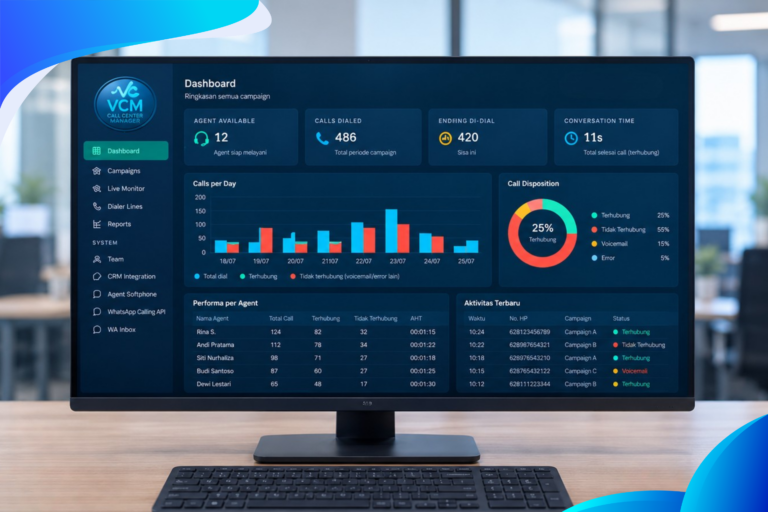



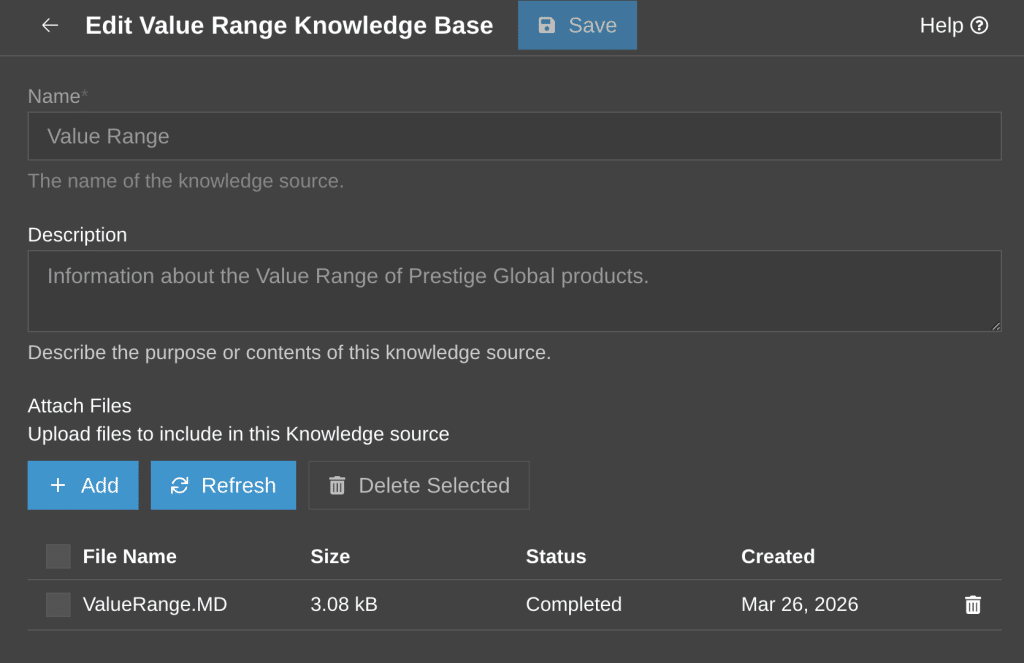

Customer service conversations hold a wealth of valuable information, ranging from frequently asked questions to recurring issues. By processing conversation data in a structured manner, companies can use it to update their Knowledge Base and help AI Agents deliver more relevant responses.
Every day, customer service teams handle a wide variety of customer inquiries. Some ask about products, request technical assistance, inquire about service status, or report the same complaints repeatedly.
The problem is that information from these conversations often remains trapped as mere call recordings and transcripts.
In reality, this data can be transformed into a useful knowledge source to improve customer service quality, including serving as a reference for AI Agents.
Real Customer Conversations Hold Deep Insights
Conversation transcripts can reveal patterns that are hard to spot through call volume reports alone.
For example, over the course of a month, customer service might discover that many customers are asking about:
How to use a specific feature.
Login or account access issues.
Information regarding plans and services.
Configuration steps.
Reasons why customers encounter issues while using the product.
If the same questions keep resurfacing, that information becomes a strong candidate to be added to the Knowledge Base. This way, companies don’t have to repeatedly build explanations from scratch every time a similar inquiry arises.
Not All Transcripts Should Be Fed into the AI Agent
One crucial principle is to avoid feeding raw transcripts directly into your Knowledge Base.
Conversation transcripts usually contain temporary information, customer personal data, off-topic dialogue, or unverified details.
Therefore, the process should be carried out in structured stages:
Call Transcript -> Pattern Identification -> Information Validation -> Knowledge Base Structuring -> AI Agent
While AI can assist in detecting patterns across large volumes of conversations, any information serving as a reference for your AI Agent must still be verified before deployment.
From Recurring Inquiries to Knowledge Base Articles
Imagine a customer service team receiving hundreds of calls every week.
Across all those interactions, they notice a frequently recurring question:
“How do I connect my phone number to the system?”
Instead of having agents explain the same procedure repeatedly, the company can draft a dedicated Knowledge Base article outlining:
Required prerequisites.
Step-by-step configuration.
Troubleshooting steps if the connection fails.
Escalation criteria for handing off to technical support.
This structured information then serves as a reference point for the AI Agent whenever similar queries arise.
How AI Helps Uncover Conversation Patterns
By leveraging AI, companies can analyze transcript datasets to identify key insights, including:
Frequently asked questions.
Most commonly reported issues.
Customer objections.
Topics that require human agent escalation.
Frequently misunderstood product information.
Inquiries that lack clear documentation.
These insights empower teams to determine exactly what information needs to be added to or updated within the Knowledge Base. With this approach, documentation is built on real customer interactions rather than internal assumptions.
A Continuously Evolving Knowledge Base
Customer needs evolve over time.
As new features launch and service procedures get updated, customer inquiries shift accordingly. As a result, a Knowledge Base should never be treated as a static, one-time project.
Companies can establish a routine evaluation cycle:
Collect -> Analyze -> Validate -> Update ->Test
For instance, teams can review a sample of recent conversations monthly to pinpoint new queries or issues not yet covered in the Knowledge Base, adding verified findings back into the system.
Keeping Humans in the Loop
AI excels at scanning and categorizing vast amounts of conversation data, but that doesn’t mean every output is instantly ready for production.
Teams must continuously verify that:
Product specifications remain accurate.
Instructions and procedures are current.
Customer personal data is excluded.
Internal confidential information is protected.
The AI Agent strictly adheres to validated knowledge boundaries.
This human-in-the-loop framework ensures the AI Agent operates on curated knowledge rather than raw, unfiltered chatter.
Integrating with Enterprise Communication Systems
Transcript processing delivers maximum value when conversation data is tied directly into your core communication infrastructure.
With an integrated ecosystem spanning Cloud PBX, Contact Center, CRM, and AI, customer interaction data forms a seamless operational loop:
Customer Call -> Transcript -> AI Analysis -> Knowledge Base -> AI Agent -> Customer Service
Historical interaction data helps companies understand customer needs while continuously identifying areas for operational improvement.
Conclusion
Call transcripts are far more than historical logs of past conversations. When properly managed, they serve as a powerful source of insight for building and updating your Knowledge Base.
By unifying conversation data, AI analytics, curated knowledge, and enterprise communication channels, organizations can establish a continuous learning model for customer service.
The goal isn’t to make an AI Agent know everything—it’s to ensure that every answer it delivers is accurate, relevant, and thoroughly validated.
SolusiPBX helps enterprises build integrated communication architectures—combining Cloud PBX, Contact Center, CRM, and AI technologies—to deliver smarter, more structured customer service.