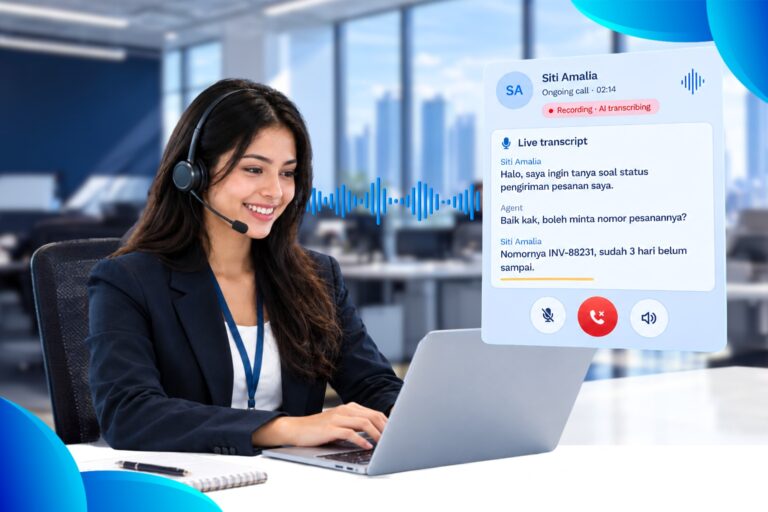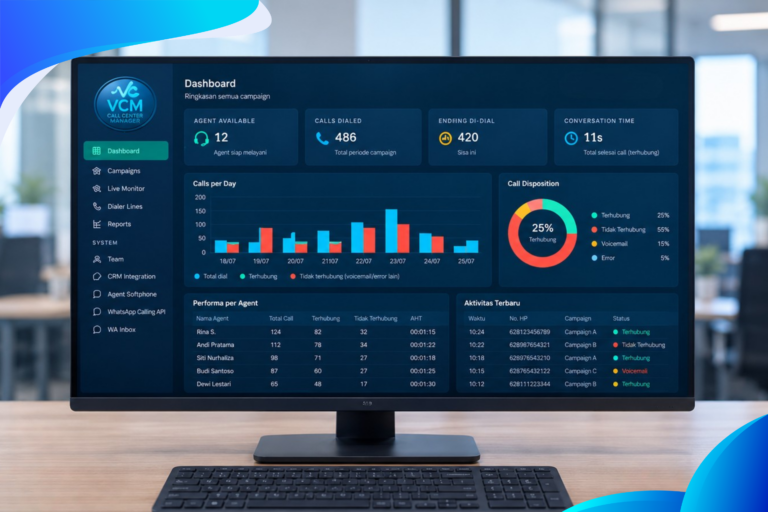



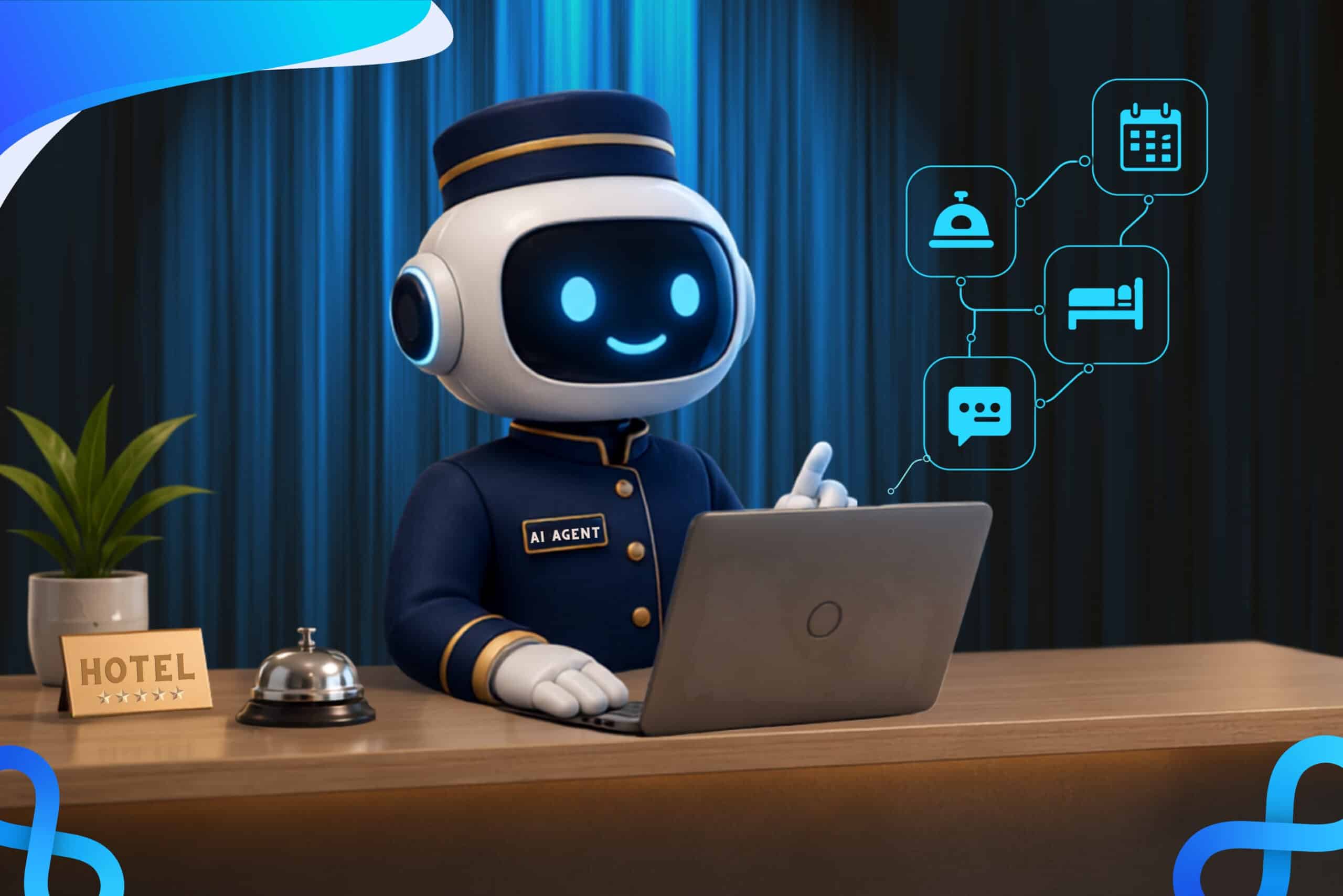

The hospitality industry is undergoing a shift in how it serves guests. Where receptionists, reservation staff, and customer service officers used to be the only front line of guest interaction, AI Agents (Artificial Intelligence Agents) are now taking an important role in creating a faster stay experience.
An AI Agent is artificial intelligence able to understand natural language, process requests, and respond like a human. In the hospitality industry, response speed and customer satisfaction are very important. Every guest request, from reservations and room service to information needs, requires a fast and accurate response so the stay stays comfortable, which is why this technology has become the answer to many of the operational challenges faced so far.
Why Do Hotels Need AI Agents?
Some common challenges hotels face in day-to-day operations include:
- • High call and message volume, especially during holidays or peak season
• Limited operating hours of front office and call center staff
• Communication mistakes caused by staff fatigue or language barriers
• Operating costs that keep rising to maintain a 24/7 customer service team
• Modern guests’ expectations of an instant response whenever they need one
Applying AI Agents at Various Hotel Service Points
- Automatic Reservations and Room Information
An AI Agent can answer prospective guests’ questions about room availability, prices, facilities, and even the booking process automatically and in real time, whether by phone or chat. This reduces the risk of losing prospective guests because of unanswered calls.
- Check-in and Check-out Services
Some hotels are starting to integrate AI Agents to help with self check-in and check-out, give instructions, and answer questions about the procedures in effect.
- Virtual Concierge
An AI Agent can act as a digital concierge that gives recommendations for restaurants, attractions, spa services, and even local transportation whenever guests need them, without waiting for staff to be available.
- Handling Complaints and Room Service Requests
Simple requests such as extra towels, AC repair, or housekeeping requests can be captured right away by the AI Agent and passed automatically to the relevant department, speeding up operational response time.
- Follow-up and Guest Satisfaction Surveys
After the stay ends, an AI Agent can automatically contact guests to ask for feedback, which is very useful for hotel management in continuously improving service quality.
The Role of Communication Infrastructure in Applying AI Agents
Applying AI Agents in a hotel does not stand alone: this technology needs reliable communication infrastructure as its foundation. A modern PBX (Private Branch Exchange) system becomes the important bridge that connects the AI Agent with all of the hotel’s communication channels, whether room phones, the call center, or other digital channels.
With the support of an integrated PBX system, an AI Agent can:
- Answer and route calls automatically to the right department
- Integrate guest data between the reservation system, front office, and call center
- Provide call reports and analytics for evaluating service quality
- Maintain service continuity even when communication volume is high
This is why the combination of AI Agents and a solid business communication system, such as a modern PBX solution, is the key to the success of digital transformation in the hospitality sector.
How an AI Agent Integrates with the Hotel’s Existing Infrastructure
One of the questions hotel management asks most often is: “Do we have to replace our entire existing phone system to use an AI Agent?” The answer, in many cases, is no. AI Agents are generally designed to integrate with the PBX infrastructure that is already running, not replace it entirely. Here is a simple picture of the technical flow.
- PBX/IP PBX as the Communication Control Center
The PBX system (whether on-premise or cloud) remains the center of all the hotel’s communication paths: room phones, front office extensions, housekeeping, and the call center. The AI Agent does not stand alone outside this system, but is connected as a “smart extension” or additional trunk on the existing PBX.
- Voice Gateway as a Bridge for Old Devices
Many hotels still use analog phones in guest rooms, especially properties that have been operating for a long time. This is where a voice gateway (for example an FXO/FXS gateway) works as the translator between those analog lines and the IP network. The voice gateway converts the analog signal from the room phone into IP-based voice packets (VoIP), so calls from the room can still be routed to the AI Agent system without replacing every phone unit in every room.
- SIP Trunk as the Connection Path to the AI Agent
Once the voice is converted into a digital format, the SIP Trunk works as the communication path that connects the PBX with the AI Agent platform (whether hosted in the cloud or integrated directly with an AI Voice service provider). Through this SIP Trunk, guest calls can be forwarded in real time to the AI Agent for processing, and the response is sent back through the same path.
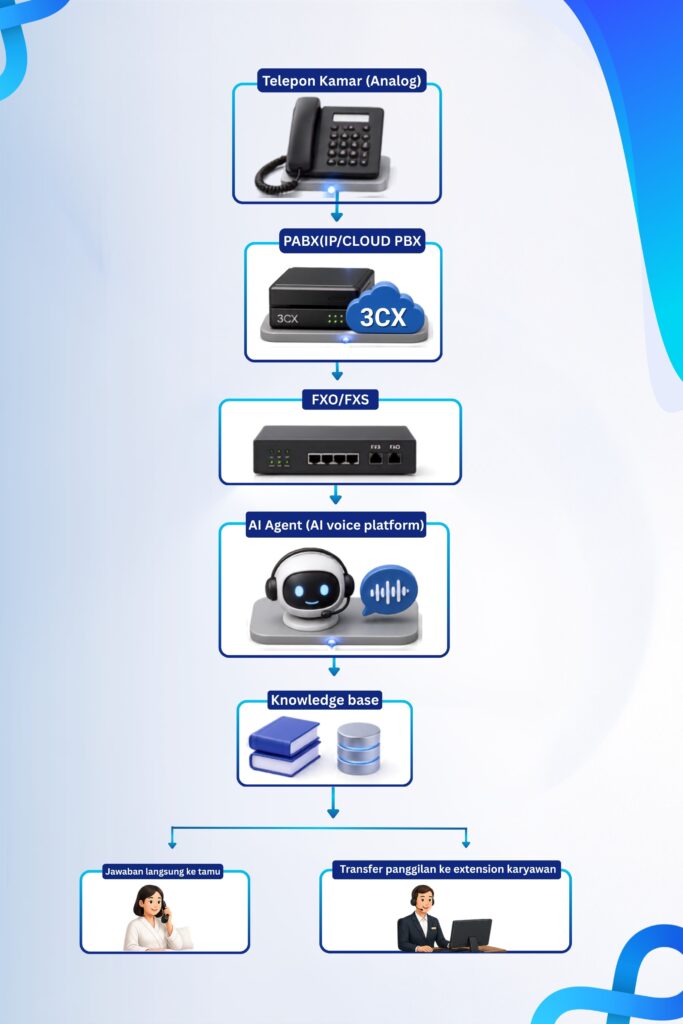
In a simple flow, the integration topology can be described as follows:
Explanation of each stage:
- Room phone (analog) → PABX: When a guest picks up the phone in the room and makes a call, the analog signal is first received by the PABX system already running in the hotel, which manages the call flow and decides where the call should be directed.
- PABX → Extension Voice Gateway: The PABX forwards the call to the extension connected to the voice gateway (FXO/FXS). This voice gateway converts the analog signal into IP-based voice packets, then channels them through the SIP Trunk to a special extension connected to the AI Agent.
- Voice Gateway → AI Agent: After passing through the SIP Trunk, the call is forwarded to the AI Agent platform (AI Voice Platform), which processes the guest’s speech using Natural Language Processing so it can understand the intent of the request naturally.
- AI Agent → Knowledge Base: The AI Agent retrieves relevant answers from the knowledge base, a database containing hotel facility information, service SOPs, FAQs, and even guest reservation data (usually connected to the PMS/CRM through an API).
- Knowledge Base → Response to Guest or Transfer to Staff: If the guest’s question falls into a general category and the answer is available in the knowledge base, the AI Agent immediately gives a voice response to the guest right then. But if the request needs human handling (for example a complex complaint, a special request, or an emergency), the AI Agent will transfer the call to the relevant hotel staff extension such as front office, housekeeping, or F&B, complete with a summary of the conversation context so staff do not have to ask again from the beginning.
This flow is what makes the AI Agent not just an “automatic answerer”, but an intelligent orchestration layer that stays closely connected to the PABX infrastructure and the human team behind it.
- Session Border Controller (SBC) for Connection Security
In medium to large-scale implementations, a Session Border Controller (SBC) is usually added between the SIP Trunk and the AI Voice platform. The SBC works to keep voice traffic secure, encrypt communication, and make sure the connection between the carrier’s SIP Trunk (for example Telkom or another provider) and the AI platform stays stable and protected from disruption and potential cyber attacks.
- API Integration to the Reservation System/PMS
So the AI Agent can give truly personal answers, for example room availability status or a guest’s reservation details, this system is also generally connected through an API path to the Property Management System (PMS), CRM, or hotel database. That way, the AI Agent does not just “talk”, but can also access data in real time to answer specific questions without staff intervention.
Why Is This Approach Beneficial for Hotels?
- No rip-and-replace needed: Existing investment in phones and the PBX system is still put to use
- Gradual migration: Hotels can start from a few service points (for example the call center) before expanding to all rooms
- Scalability: Adding trunks or AI Agent capacity can be done without changing the core architecture
- Reliability: Because it still runs on top of proven PBX infrastructure, the continuity of the hotel’s communication services is maintained
With an integration approach like this, applying AI Agents becomes far more realistic in both cost and implementation time, because it makes use of the communication infrastructure assets the hotel already owns, while adding a layer of artificial intelligence on top.
Real Benefits for the Hospitality Business
Aspect | Benefits of Applying AI Agents |
Operational Efficiency | Reduces staff workload for repetitive tasks |
Service Availability | 24/7 response with no days off |
Guest Satisfaction | Fast and consistent responses improve the stay experience |
Operating Costs | Reduces the need to add staff during busy hours |
Data & Insight | Every interaction can be analyzed to improve service |
Challenges to Pay Attention To
Although it offers many benefits, applying AI Agents in hotels still needs to pay attention to several things, such as:
- The human personal touch that is still needed for complex or sensitive situations
- Readiness of technology infrastructure and integration with existing systems
- Staff training so they can work alongside AI systems
- Guest data security and privacy
The ideal approach is to make the AI Agent a supporting partner, not a complete replacement for hotel staff, so human interaction is maintained at the moments that need it.
Conclusion
Applying AI Agents in the hospitality world is no longer just a trend, but a strategic need to meet the expectations of modern guests who want fast, personal, and round-the-clock service. With the support of the right communication infrastructure, hotels can deliver a better stay experience while significantly improving operational efficiency.
For hospitality business players who want to start integrating AI Agent technology with a reliable communication system, now is the time to consider an integrated communication solution that can support that digital transformation comprehensively.