

Webrtc Softphone
In today’s digital era, fast and flexible communication infrastructure is a top priority—especially within the hospitality sector, including hotels, serviced apartments, hospitals, and public facilities. A browser-based WebRTC softphone solution seamlessly integrated with 3CX PBX via a WebRTC Gateway enables users to place and receive calls directly within their web browser—completely eliminating the need for additional software installation.
This solution is ideal for:
Hotel Guest Room Telephony: Web-based in-room virtual phones.
Hospitality Kiosks & Terminals: Interactive public access points.
Mobile Customer Service: Native integration within custom Android & iOS applications.
Internal Staff Communication: Frictionless collaboration without physical IP phone hardware.
What Is WebRTC?
WebRTC (Web Real-Time Communication) is an open framework and protocol suite that enables real-time voice, video, and data communication directly inside web browsers—such as Google Chrome, Microsoft Edge, or Apple Safari—without requiring plugins, extensions, or application downloads.
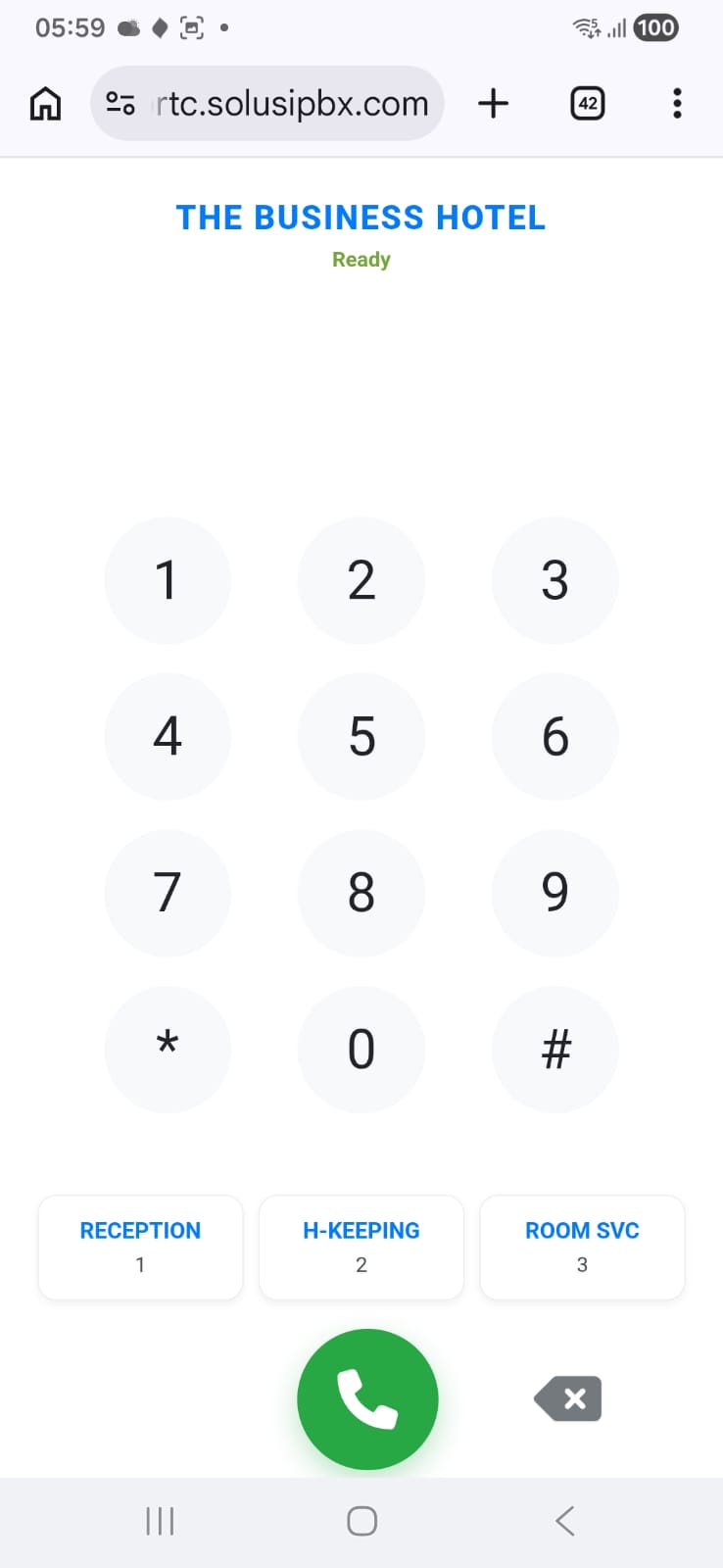
With WebRTC:
No softphone installation required.
No manual SIP client configuration needed.
Accessible via direct URL (e.g.,
[https://call.yourhotel.com](https://call.yourhotel.com)).Cross-platform support for desktop, tablet, and mobile browsers.
WebRTC Gateway & 3CX Integration Architecture
In this implementation, the WebRTC Gateway functions as a bridge protocol translator between WebRTC (browser-side) and native SIP (3CX).
Core Components:
Browser User: WebRTC Client Interface.
WebRTC Gateway: SIP Bridge / Media Server.
3CX PBX Server: Central Call Control System.
Destinations: Extensions, Call Queues, and IVR Menus.
Call Flow:
User accesses the web softphone page (e.g., by scanning a QR code).
The browser establishes a secure WebRTC connection with the Gateway.
The Gateway translates WebRTC signaling and media (SRTP/Opus) into native SIP/RTP.
SIP sessions are delivered to 3CX registered as a virtual extension or internal trunk.
3CX routes the call to:
Guest room extensions
Customer service call queues
Interactive Voice Response (IVR) menus
External PSTN/SIP trunks (if permitted)
3CX Integration & Capabilities
3CX serves as a modern IP-PBX platform supporting:
Extensions & Ring Groups
Call Queuing & Skill-Based Routing
Digital Receptionist / IVR
Real-Time Analytics, Reporting & Call Recording
Desktop & Mobile Softphones
By utilizing a WebRTC Gateway, organizations can build custom web-based softphones that function as:
Registered SIP extensions within 3CX.
An internal SIP trunk bridge.
Key Advantages:
Retains 3CX’s complete call routing and PBX management capabilities.
Zero disruption to existing telephony infrastructure.
Seamlessly merges with 3CX Call Center modules.
Hospitality Use Cases
1. Browser-Based Room Telephony
Replaces traditional physical IP phones in guest rooms:
In-room Smart TVs or tablets launch the web softphone interface.
Guests can dial with a single touch:
Reception / Front Desk
Room Service
Housekeeping
Business Benefits: Eliminates physical IP phone hardware expenses, simplifies maintenance, and enables custom white-label branding.
2. Public Hospitality Terminals & Interactive Kiosks
Ideal for high-traffic environments:
Hospitals
Shopping Malls
Building Lobbies
Airports
University Campuses
Visitors tap a single button on an interactive kiosk display:
“Call Information”
“Call Security”
“Call Customer Service”
Calls route directly into designated 3CX queues.
3. Android & iOS Mobile App Embedding
Embed the WebRTC softphone engine directly into:
Guest portal apps
Customer support portals
Membership apps
Business Benefits: Eliminates native SIP stack development complexities, removes the need to publish standalone softphones to app stores, and delivers a lightweight footprint.
Security & Access Control
The solution implements multi-layered enterprise security mechanisms:
HTTPS & SSL/TLS Encryption
Token-Based Authentication
Automated Session Timeouts
IP Access Restrictions
Role-Based User Permissions
Guarantees secure operation across internal staff devices, public terminals, and guest room interfaces.
Advanced Enhancements & Future Roadmap
Potential expansion modules for WebRTC-PBX deployment:
Website Click-to-Call Widgets
Native CRM Integration (Instant Customer Data Pop-ups)
Call Recording & Real-Time Monitoring
Custom Call Analytics Dashboards
WhatsApp & Omnichannel Integration
AI-Powered WebRTC Voice Agents